How Medical Debt Impacts Your Credit Score? What You Need to Know
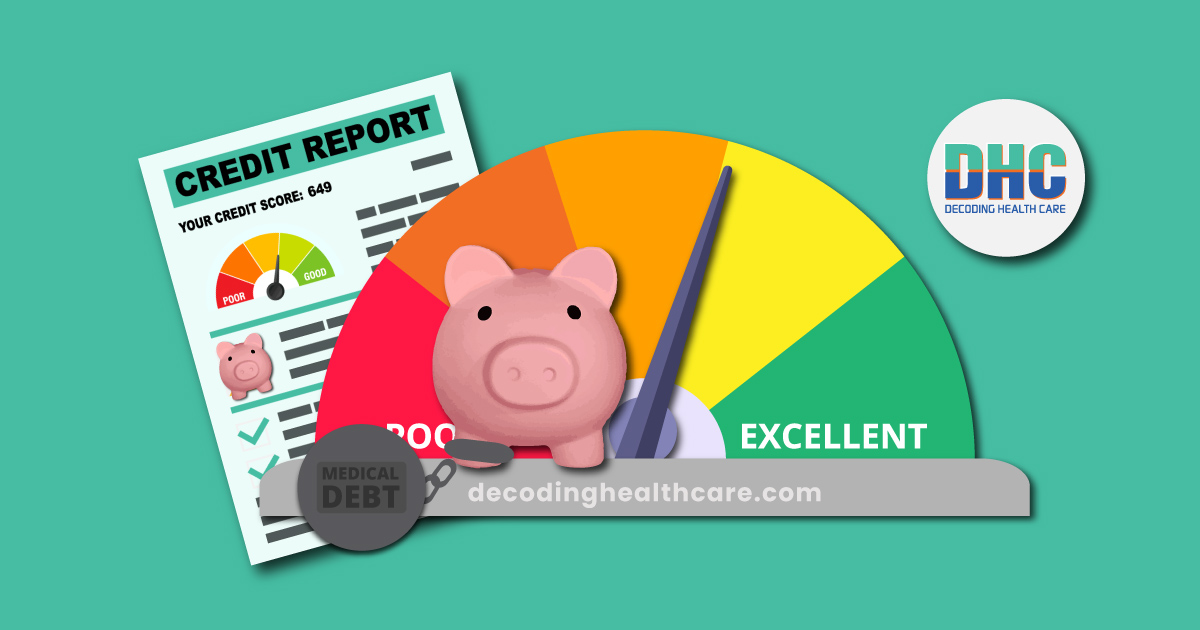
Medical debt is one of the most common financial challenges facing Americans, both insured and uninsured alike. Unlike consumer debt, medical debt often arises from unforeseen or emergency circumstances, not a lack of financial planning, or even a lack of insurance coverage. So many people wonder if medical debt can affect their credit scores.
The good news is that credit reporting rules have reduced the impact of medical debt on credit scores. However, unpaid medical bills can still create financial problems if they end up in collections or become consumer debt.
Here’s what you need to know.
Table of Contents
- Can Medical Debt Hurt Your Credit Score?
- Medical Debt That Does Not Appear on Credit Reports
- Medical Debt vs. Consumer Debt
- When Can Medical Debt Affect Your Credit Score?
- How will Medical Debt in Collections Affect My Credit?
- Consequences of Unpaid Medical Debt
- How Decoding Health Care can Help and Related Articles
- Bottom Line
- Frequently Asked Questions (FAQs)
Can Medical Debt Hurt Your Credit Score?
Yes — but not always — and not as quickly or as severely as it once did.
The answer to whether medical debt hurts your credit score starts with where you live. Few states have banned medical debt from appearing on credit reports.
For most of the country, the major credit reporting agencies (Experian, Equifax, and TransUnion) offer some consumer protections. These protections cover all medical bills reported by debt collectors, also known as medical collections. Because of this, many medical bills never appear on a credit report or impact credit scores at all.
Medical Debt That Does Not Appear on Credit Reports
The major credit reporting agencies or credit bureaus no longer include medical collections on credit reports that are:
- Less than a year old
- Initially under $500
- Paid off
If you see medical collections that fall under one of those three categories on your credit report, you should dispute the item with the credit bureaus.
One-Year Grace Period
Medical providers and collection agencies must wait 365 days from the date the bill first became delinquent before adding it to your credit report. These changes recognize that medical billing is often complicated and that patients may need time to resolve insurance disputes and billing errors, or make payment arrangements.
However, don’t procrastinate, because these steps can take time — sometimes a lot — waiting on hold and navigating phone trees, websites, and patient portals. There’s also record keeping, writing letters, and managing deadlines. For many, it can become a part-time job!
Medical Debt Collections Under $500
The under-$500 reporting exclusion applies to the initial reported balance of the collection account. This is not the original hospital medical bill before any insurance, payments, or financial aid has been applied. It’s also not the balance that remains after payments have been made to debt already in collections.
For medical debt already on credit reports, many consumers mistakenly believe they can simply pay a $1,000 medical collection down to $499 and have it disappear. That is a common misconception.
However, reducing a large balance to under $500 before it goes to collections may be helpful, depending on how the debt is reported to the collection agency.
What Happens if You Pay Off Medical Debt?
Unlike consumer debt, paid medical collections are removed from credit reports, rather than just marked as “paid.” This means paying off a qualifying medical collection can help improve your credit profile. Future lenders won’t see the collection account.
If you pay off a medical collection, verify that it has been removed by checking your credit reports after processing is complete.
Medical Debt vs. Consumer Debt
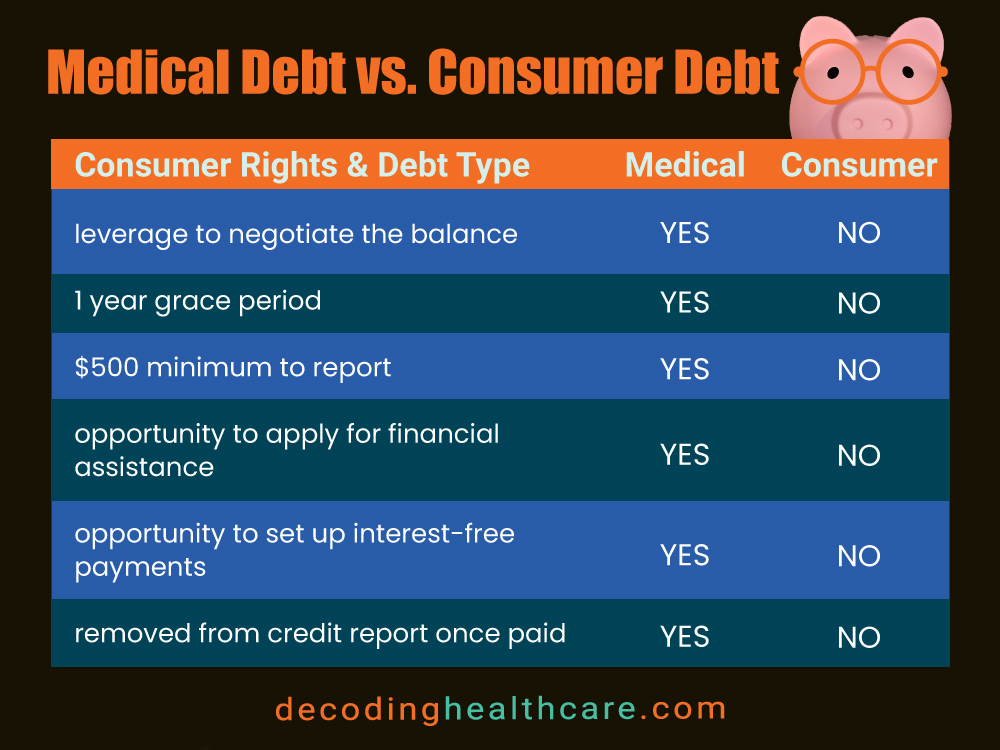
Many families take on consumer debt by using credit cards or personal loans to cover medical expenses. If you pay medical bills with a credit card, these charges become consumer debt. This also applies to medical credit cards such as CareCredit. These cards are marketed to consumers for financing health, wellness, dental, and pet care services and products. However, despite their names or the fact that many healthcare provider offices actively promote them as a way to pay out-of-pocket costs, they are consumer credit cards.
Consumer protections for medical debt collections don’t apply to consumer debt, even if the charges are for medical expenses. Consumer debt can always show up on your credit report. Additionally, you lose leverage to negotiate the balance with the hospital or provider once it’s been charged using a consumer credit card.
When Can Medical Debt Affect Your Credit Score?
By taking on consumer debt for medical bills, you can hurt your credit score by:
- Increasing credit card balances and interest payments
- Raising credit utilization ratios
- Causing missed payments on other debts
- Increasing your total debt
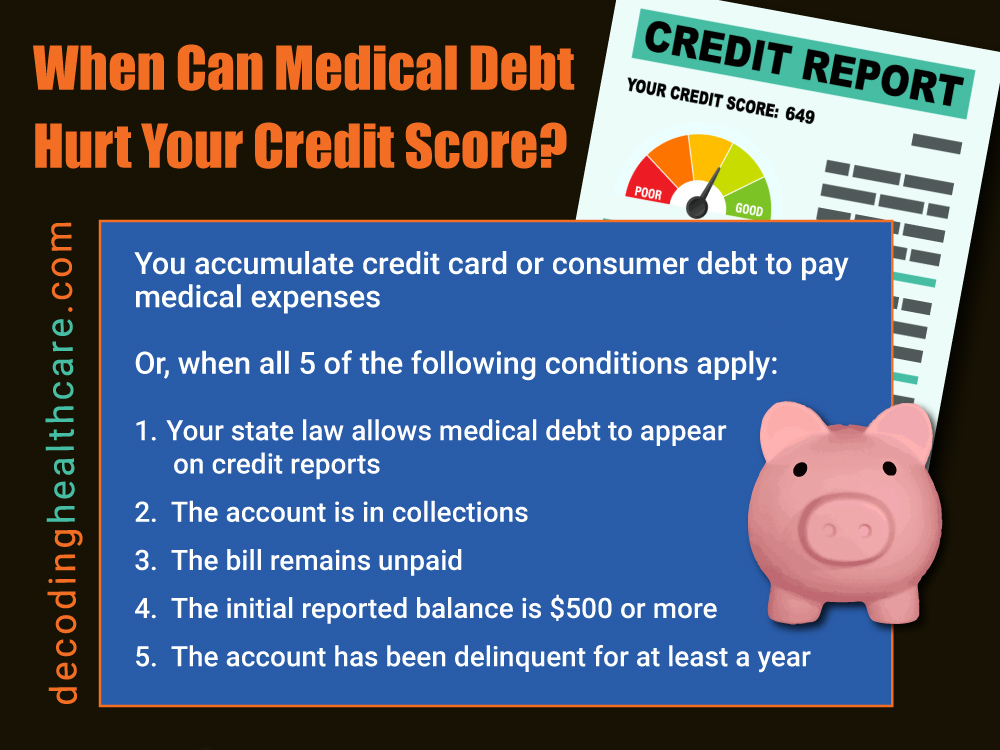
Unpaid medical debt also impacts your credit score when all of the following conditions apply:
- Your state law allows medical debt to appear on credit reports
- The account is in collections
- The bill remains unpaid
- The initial reported balance is $500 or more
- The account has been delinquent for at least a year
How will Medical Debt in Collections Affect My Credit?
Once a medical collection account shows up on your credit report, it can lower your credit score until it’s paid and can take around 7 years to drop off your credit report.
A low credit score limits your credit and financial opportunities and subjects you to higher interest. You’ll also have higher car payments and insurance costs. Even worse, bad credit can limit your ability to buy a house or get a job!
How Much Can Medical Collections Lower Your Credit Score?
The exact impact depends on several factors, including:
- Your credit score before medical collections was reported
- The amount of debt
- Your overall credit history
- Whether you have other negative marks on your report
Generally, consumers with higher credit scores tend to experience a larger drop in their credit scores when a collection account appears on their credit reports.
Consequences of Unpaid Medical Debt
Medical Collections
Even when unpaid medical debt is not reported to credit bureaus, it can still create hardship. Hospitals aren’t limited to reporting your collections account to the credit bureaus. Depending on your state’s laws, they may use other aggressive legal or financial actions to collect medical debt. Extraordinary collections activities could include filing lawsuits, garnishing wages, placing liens on property, or seizing bank accounts.
However, if your medical debt is from a nonprofit hospital, IRS Section 501(r)6 requires them to provide specific waiting periods and notification requirements before beginning extraordinary collection activities. Learn more about ECAs and IRS Section 501(r) in our article, Medical Debt Laws.

Medical debt can rob you of your wealth, health, and psychological well being.
Medical debt can lead people to avoid medical care, develop physical and mental health problems, and face adverse financial consequences — even bankruptcy. Learn more from our main subject article, Decoding Medical Debt.
How Decoding Health Care Can Help
If you are facing medical debt or the rational fear of medical debt, Decoding Health Care is here to help. We provide independent educational information aimed at protecting your finances from the healthcare system.
The regulatory and legal landscape of health care is always changing, new tools, money-saving tips, and resources are released. To stay informed, sign up for our free monthly newsletter, The DHC Insider, which is dedicated to patient financial wellness.
And don’t forget our comprehensive articles on our website.
Related Medical Debt Articles
- Decoding Medical Debt
- Medical Debt: A Threat to Your Finances
- Medical Debt Laws: What You Should Know to Protect Yourself
- Medical Debt: Your Rights and Protections
- 8 Steps to Keep Medical Debt Off Your Credit Report
- How Can I Get Help with Medical Debt?
The Bottom Line
In most states, medical debt can appear on your credit report. However, it has become less harmful to credit scores than it was in the past. Today, unpaid medical collections generally must exceed $500 and remain unresolved for more than a year before they can appear on a credit report. This gives you one year to resolve the debt before it can impact your credit score.
Frequently Asked Questions (FAQs)
Does medical debt automatically go on your credit report?
No. Medical debt generally must be over $500, sent to collections, and remain unpaid for more than one year before it can appear on a credit report.
Why should I avoid paying medical bills with credit cards?
When you pay medical bills with credit cards, the debt becomes consumer debt. This can lead to higher interest and more debt. Additionally, you lose your consumer protections and leverage to negotiate the balance.
Can a hospital bill hurt my credit score?
A hospital bill by itself does not affect your credit score. It may affect your credit if it becomes a qualifying collection account.
Is medical debt under $500 reported to credit bureaus?
No. Medical collections with original balances under $500 are no longer included on consumer credit reports.
Will paying medical debt improve my credit score?
Paid medical collections are removed from credit reports, which may help improve your overall credit profile.
How long can medical debt stay on a credit report?
Unpaid medical collections can remain on a credit report for up to seven years from the original delinquency date.
Article by Julie Gunstanson, Certified Medical Billing Advocate, and Lauren R. Jahnke, MPAff, author of Decoding Health Insurance and the Alternatives: Options, Issues, and Tips for Saving Money.
Last update: 8-13-2026
Disclaimers and disclosures: This article provides general information about medical debt. For guidance specific to your situation, consult financial counselors, billing advocates, or legal assistance in your area. Decoding Health Care provides independent and educational information and does not endorse any specific insurance plans or other health coverage products. AI tools were used to assist in researching this article; however, human subject-matter experts always extensively revise, fact-check, edit, and approve our content.