Decoding Health Insurance Literacy
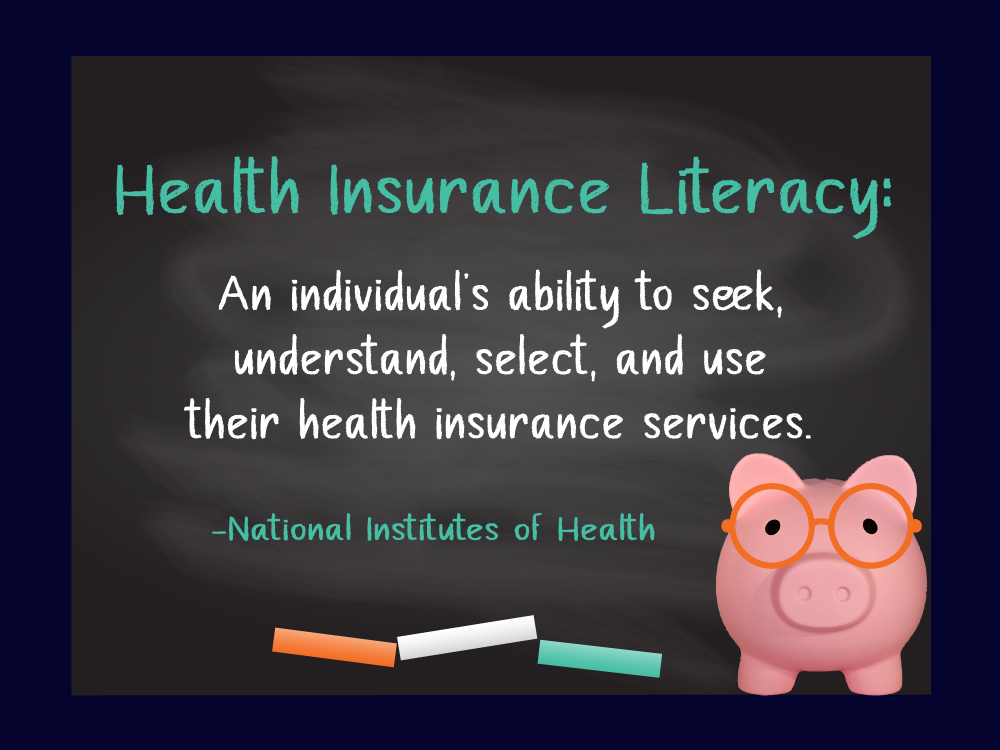
You may have heard of “health literacy,” which is the ability to understand and use health-related information. “Health insurance literacy” is a subset of health literacy, and it means having a thorough understanding of health insurance — such as how to choose health plans and understanding your coverage and benefits. Why is health insurance literacy so important? You and your family’s health as well as finances strongly depend on it.
Table of Contents
- How Common is Low Health Insurance Literacy?
- Consequences of Low Health Insurance Literacy
- What Does Health Insurance Literacy Involve?
- How Decoding Health Care Can Help with Health Insurance Literacy
- Benefits of Health Insurance Literacy
- Key Points
- Frequently Asked Questions (FAQ)
- Related Articles from Decoding Health Care
- Health Insurance Literacy Glossary
How Common is Low Health Insurance Literacy?
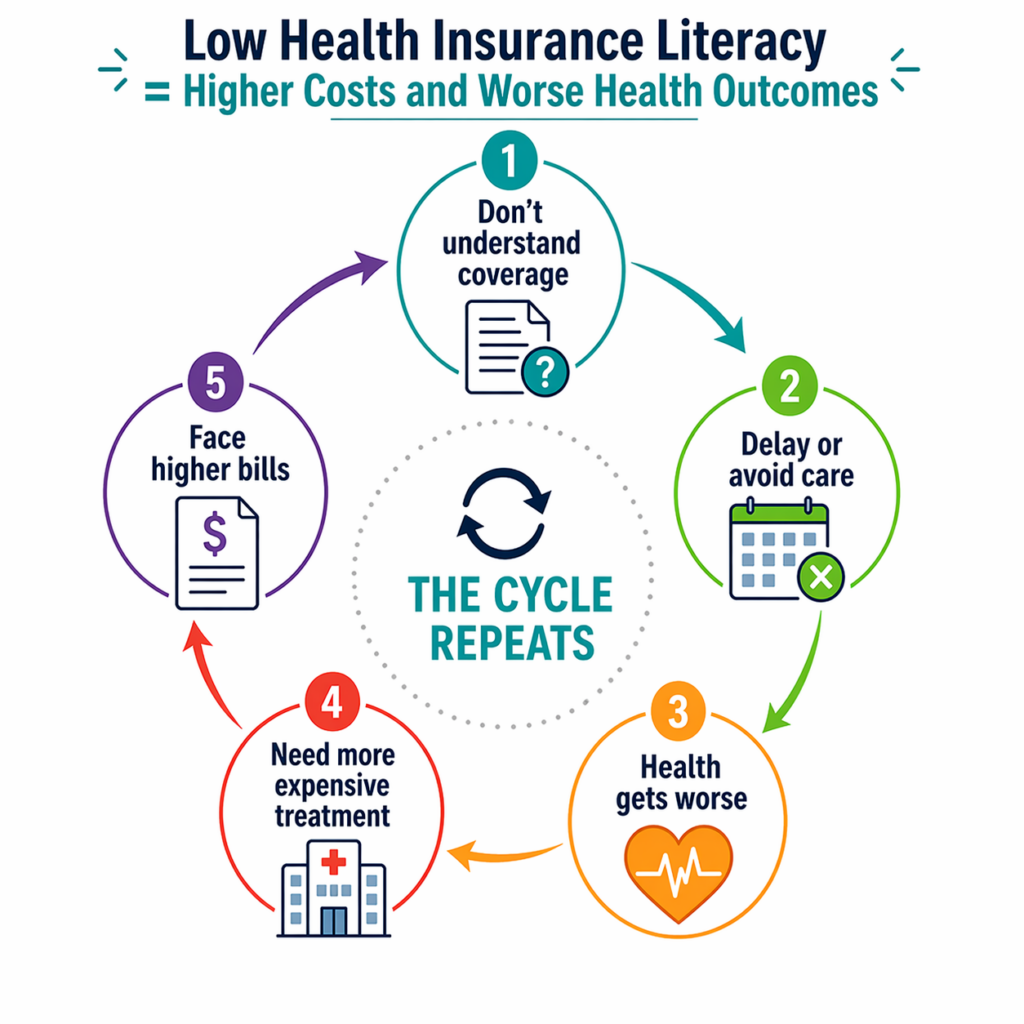
If the documents and brochures you get from your health insurance company look like gibberish, you’re not alone. About 72% of insured American adults are confused about their health insurance plans due to low health insurance literacy. They have a harder time using their insurance due to problems such as identifying which providers are in-network, understanding deductibles, and determining which services are covered. Why does this matter? Low health insurance literacy leads to delayed or skipped care and worse health outcomes. It also leads to overpaying for healthcare services and medical debt.
Consequences of Low Health Insurance Literacy
Delaying or Skipping Necessary Care
About 40% of insured adults delay or skip care due to cost concerns, often because they do not understand their coverage or fear high bills. Many skip preventive care, which should be free to you if you have a health plan that complies with the Affordable Care Act (ACA). Additionally, patients commonly ration their medications or don’t fill them at all. One in six reported they were unable to receive recommended treatment as a direct result of their problems with insurance.
Worse Health Outcomes
Skipping and delaying care often leads to a decline in your health, which ultimately results in more intensive and expensive medical care later on. People with low health insurance literacy are also more likely to use emergency rooms or out-of-network providers instead of lower-cost options for non-emergency care. They also have higher inpatient utilization and longer hospital stays. People don’t just pay more—they get sicker.
Overpaying for Health Care
People with low insurance literacy get more surprise bills and end up paying more for health care. About 30% of insured adults find it difficult to understand what they will owe out-of-pocket. This confusion makes it difficult to estimate costs before receiving planned health care, or track deductibles and out-of-pocket maximums. Many have difficulty understanding what’s covered or how to navigate provider networks or drug formularies. Without health insurance literacy, it’s difficult to deal with insurance hurdles such as preauthorizations, step therapy, or insurance denials.
More Medical Debt
Low health insurance literacy leads to unexpected costs and a harder time resolving billing errors. Almost half of insured adults surveyed with insurance problems were unable to resolve them satisfactorily. People with low insurance literacy often have problems understanding their explanation of benefits (EOB) documents or how to appeal claim denials. Without this knowledge, you could end up paying bills that should have been covered by insurance — or worse, end up with medical debt.
What Does Health Insurance Literacy Involve?
- The ability to evaluate and choose the right insurance plan to fit your health needs and budget
- Mastering the vocabulary, including terms related to coverage, networks, and cost-sharing
- Knowing how to use your plan effectively to maximize available benefits while minimizing out-of-pocket expenses
- The ability to navigate insurance-imposed barriers, such as pre-authorizations (prior approvals) and appeal insurance denials
Comparing Health Plans
Health insurance literacy starts with learning how to compare health plans if you have multiple ones to choose from. It means knowing how to pick a plan that will best fit your needs — not looking at the premium alone — but also minimizes out-of-pocket spending. The greater your healthcare needs, the more coverage you need. For example, if you have a health problem that requires regular care, such as diabetes or heart disease, you may want to choose a plan with a higher premium.
The Health Insurance Plan Comparison Calculator can help you compare health plans.
Learning How to Use Your Health Insurance
Knowing how to use your health plan and what it does and doesn’t cover is essential for health insurance literacy. You need to know at least the basics, like where to get health services and how to find out which providers and facilities are in your network. You also need to know how much you are responsible for paying (like your copayment and deductible) and how to get needed prescriptions.
Health insurance literacy includes reading your health plan documents, which are available on the health plan website and also often in paper copies mailed to you. It’s important to note that plan networks can change after paper documents are mailed, so always refer to your health plan’s website for the most recent information. Health plans publish summaries to help you understand your coverage, but sometimes you will need to dig deeper into the plan documents or contact the health plan to get answers about your particular situation. If you don’t understand something or can’t find the answers you need, such as a question about what’s covered or what your out-of-pocket costs are, you should take advantage of your health plan’s customer service platform. You can also call or email a customer service representative.
At your doctor’s office, when you talk to your provider about your health and treatment options that are covered by your insurance plan. If there’s something you don’t understand, ask for an explanation. You can also talk to the folks in the billing department. No one knows more about the ins and outs of health insurance policies than the billing clerks at medical clinics and hospitals. Billing agents at a medical office or health plan can’t tell you what services you need or what coverage you qualify for, but they can tell you which services insurance companies are more likely to cover. In some cases, you will still need official approval from your insurance company before getting certain procedures, which your doctor can submit. Your provider can also often help with appealing claims that your insurance should have covered.
Consumer Assistance for Insurance Problems
If you still need help with your health insurance and have a problem or question, contact your state Consumer Assistance Program. These programs help consumers experiencing problems with their health insurance or seeking to learn about health coverage options.
How Decoding Health Care Can Help with Health Insurance Literacy
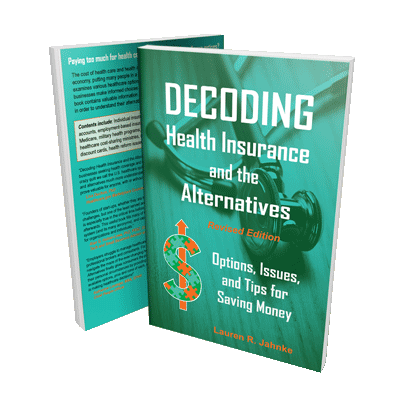
Our book, Decoding Health Insurance and the Alternatives: Options, Issues, and Tips for Saving Money, is a comprehensive, non-partisan consumer guide to understanding the current U.S. system for health insurance and getting health care. It includes many practical tips to help you save money, whether you have insurance or not.
Additionally, you can subscribe to our free monthly newsletter, the DHC Insider. You’ll stay up to date on recent national issues and legislation affecting healthcare affordability. You’ll also get the latest tips, resources, tools, and hacks to spend less on health care, whether you are insured or not.
Benefits of Health Insurance Literacy
By becoming health insurance literate, you can better use your insurance to access and pay for health care, minimizing its impact on your finances. Yes, health insurance literacy can be time-consuming — and possibly frustrating at times — but learning the processes and lingo will lead to a healthier and richer future for you and your family.
Key Points
- Health insurance literacy, which is a thorough understanding of health insurance, is essential to your health and finances.
- Most Americans have low health insurance literacy, both insured and uninsured.
- Low health insurance literacy leads to delayed or skipped care, worse health outcomes, overpaying for healthcare services, and medical debt.
- Insurance literacy involves:
- mastering the vocabulary, including terms related to coverage, networks, and cost-sharing
- the ability to evaluate and choose the right insurance plan to fit your health needs and budget
- knowing how to use your plan effectively to maximize available benefits while minimizing out-of-pocket expenses
- To help you understand your insurance plan, read your insurance documents and plan summaries, ask questions, and take advantage of your health plan’s customer service platform.
- Your provider’s office can help answer questions about covered treatments and often help you with insurance preapprovals and appeals.
- Our book, Decoding Health Insurance and the Alternatives: Options, Issues, and Tips for Saving Money, is a comprehensive consumer guide to understanding health insurance and health coverage options in the U.S. It includes many practical tips to help you decipher the options and save money.
- Follow Decoding Health Care’s website, blog, and newsletter to become health insurance literate, manage out-of-pocket expenses, and avoid or reduce medical debt.
Frequently Asked Questions (FAQ)
What is health insurance literacy?
It is defined as an individual’s ability to seek, understand, select, and use health insurance services. This includes mastering the vocabulary (like deductibles and cost-sharing), evaluating which plan fits your budget, and knowing how to maximize benefits while minimizing out-of-pocket costs.
How many people actually struggle to understand their insurance?
It is very common. Approximately 72% of insured American adults report being confused by their health insurance plans. This confusion often stems from difficulty identifying in-network providers, understanding deductibles, or determining what services are actually covered.
Why is health insurance literacy important?
Low health insurance literacy leads to delayed or skipped care, worse health outcomes, overpaying for healthcare services, and medical debt. Without health insurance literacy, you’ll pay more for insurance and health care, and owe money for bills your insurance should have paid.
Related Articles from Decoding Health Care
- Everything You Need to Know About the Affordable Care Act in One Short Blog Post
- Ready to Sign up for Health Insurance? 8 Important Questions Answered Here!
- How to Get Free Help Enrolling in Individual Health Insurance
- Health Insurance Marketplace Facts: Special Enrollment Periods
- Who Medicaid Covers and Why is it Important?
- History of Health Insurance in the U.S.
- Health Insurance Tips for Traveling
Article by Julie Gunstanson, Certified Medical Billing Advocate, and Lauren R. Jahnke, MPAff, author of Decoding Health Insurance and the Alternatives: Options, Issues, and Tips for Saving Money.
Article Last Updated: 8-27-2026
Disclaimers and disclosures: This article provides general information about healthcare options. For guidance specific to your situation, consult insurance brokers, financial counselors, billing advocates, legal assistance, or other experts in your area, as appropriate. Decoding Health Care provides independent and educational information and does not endorse any specific insurance plans or health coverage products. AI tools were used to assist with researching this article; however, human subject-matter experts always extensively revise, fact-check, edit, and approve our content. Affiliate disclosure: GoodRX is an affiliate link that supports our content.
Do You Have a Medical Bill You Can’t Afford or Medical Debt in Collections?
Before you pay that big medical bill, read this!
Get our Free Medical Debt Quick Start Guide and learn the first steps to take before sending a dollar to a medical provider or collection agency.
By submitting this form, you agree to receive educational emails from Decoding Health Care, our free guide, and our free monthly DHC Insider, an educational newsletter focused on protecting your finances from high healthcare costs and medical debt—with or without insurance. You may unsubscribe at any time. Click here for our Privacy Policy