Alternative Healthcare Options
Many people can’t afford traditional comprehensive health insurance, or they choose not to use insurance for certain things. Or they may have insurance but be “underinsured,” meaning they have a high-deductible plan or high copayments so they still have significant out-of-pocket costs before their insurance kicks in. If you are in any of these situations, you may benefit from knowing about alternative healthcare options. There are pros and cons to all the options, so it pays to learn more about the details!
It’s important to note that alternative healthcare options are not traditional comprehensive insurance. They are not regulated like insurance under state and federal laws, such as the Affordable Care Act (ACA).
Direct Primary Care (DPC)
As noted in our article on Direct Primary Care, DPC is a healthcare model where patients pay a Primary Care Provider (PCP) a monthly fee for increased access and more personalized attention. DPC providers (which can be physicians or other providers) have fewer patients than other PCPs, so they can spend more time and have longer appointments if needed. DPC is an alternative healthcare option that offers primary care like routine prevention, treatment of illnesses, and patient education. Most DPC providers also offer telemedicine services.
DPC providers don’t accept health insurance by definition since membership fees pay for their services. This reduces the administrative overhead for providers, saving them money and time, so they can spend more time with patients. Some patients with DPC still have health insurance that they can use for other services not covered by their DPC membership, like specialists and hospitals.
Starting in 2026, people with Health Savings Accounts (HSAs) can use their HSA funds to pay for DPC membership fees as a “qualified medical expense.” People in DPC can also qualify to start or contribute to HSAs if they have a high-deductible health plan, which they could not do previously.
Telemedicine Companies
You can also pay cash for telemedicine visits (virtual care through your phone or computer), either by subscription or per visit, with companies such as Teladoc and Doctor on Demand. This can be helpful for people without insurance to get flat-rate pricing for minor and urgent health needs that don’t require an in-person visit. (Some insurance plans and employers offer telemedicine services, too.)
Alternative Health Plans
Alternative healthcare options include coverage types that can provide a financial safety net for specific needs. These plans include healthcare cost-sharing ministries, short-term health insurance, limited health plans, discount plans, and “packaged medical insurance.” These plans often look like traditional health insurance, but they are not. Learn more in our article Alternative Health Plans.
Cash Pay Discounts
Cash Pay or Self Pay
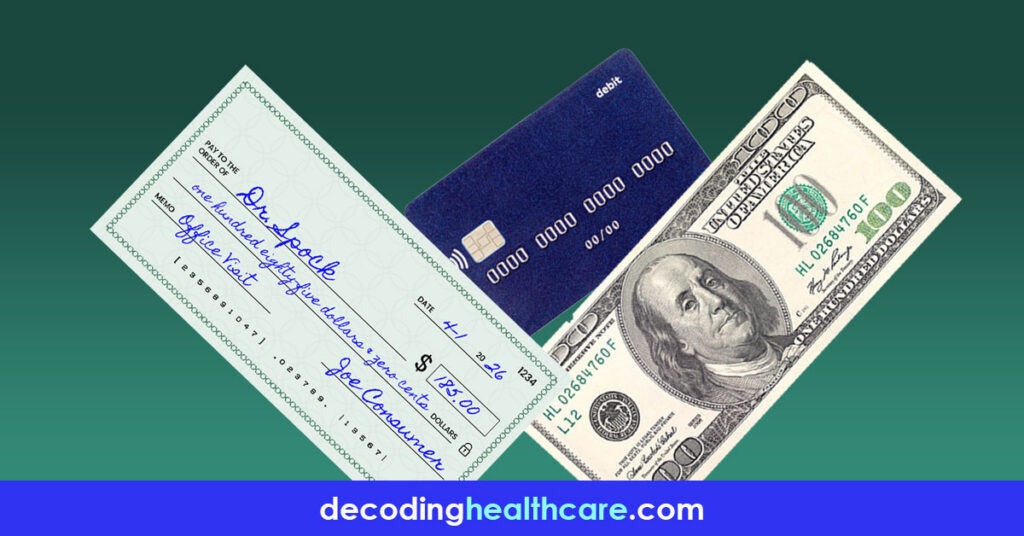
Paying for healthcare directly — often called “self-pay” or “cash pay” — is a viable alternative healthcare option, whether you are uninsured or simply looking to bypass restrictive insurance networks. (Despite the name, you don’t have to literally pay cash; providers typically accept credit cards or other standard payments.) The core difference is that you pay the provider directly at the time of service rather than waiting for an insurance company to process a claim and tell you what you owe. Many doctors prefer this because it eliminates the headache of insurance paperwork, so they may offer cash discounts to people who pay themselves without insurance. However, some large facilities or contracted providers may have restrictions on offering cash rates, so it’s always best to ask up front.
Negotiating Discounts
You often have more leverage to negotiate healthcare prices than you might think, especially if you can pay at the time of your appointment. Since insurance companies negotiate lower rates for themselves, an uninsured person might be billed a much higher “list price” unless they speak up. To get a better deal, you can research local price benchmarks online beforehand (such as FAIR Health or others on our Resources page under price comparison tools), or ask the provider to match Medicare reimbursement rates. Even after a procedure, you can still advocate for yourself by requesting an itemized bill to check for errors or asking for a discount for a lump-sum payment.
Pharmacy Savings
You may save money at the pharmacy by paying cash for many prescription drugs instead of running it through your insurance. Sometimes the cash price is less than your copay, so it can be worth it to ask the pharmacist, assuming you have not met your deductible yet. Pair the cash price with your free GoodRx discount card to save even more.
In addition to free pharmacy discount cards, you can also access savings through memberships such as Costco’s Member Prescription Program. You can even have several RX discount cards and savings programs on hand and use them to compare prices.
Retail Health Clinics
Various types of health clinics have up-front pricing for cash-pay patients (some also accept insurance). For example, walk-in retail clinics like CVS MinuteClinics offer basic services with more transparent and lower prices than typical medical offices. The providers are usually physician assistants and nurse practitioners, not physicians, and can treat routine illnesses and injuries.
Community Health Centers and Non-Profit Clinics
There are also thousands of non-profit clinics in the U.S. called community health centers (CHCs). These receive government grants and charge on a sliding-scale basis according to your income. They see uninsured patients and also accept Medicaid/CHIP, and some accept other insurance as well. They focus on primary care but also may offer additional services. You can find a CHC near you by searching the free HRSA database.
Additionally, you may be able to find private non-profit organizations and others that offer low-cost or free clinics and social services through Findhelp.org or 211.org.
Medical Tourism
It is also worth mentioning medical tourism. It involves traveling to another location where healthcare services are less expensive. Follow Decoding Health Care for upcoming articles on medical tourism.
Key Points on Alternative Healthcare Options
- Many people can’t afford or choose not to use health insurance.
- With Direct Primary Care (DPC), members pay a subscription fee for direct access to providers for primary care services.
- You can ask for cash-pay discounts and negotiate prices when not using insurance.
- Look for membership discount plans and pharmacy discount cards.
- Retail clinics offer basic services with transparent, lower prices than typical medical offices.
- Community Health Centers (CHCs) provide healthcare services on a sliding-scale basis, regardless of insurance status.
- Private non-profit organizations may also provide low-cost or free clinics.
- Telemedicine companies provide virtual care, either by subscription or per visit.
- Follow Decoding Health Care to learn more about alternative healthcare options.
Frequently Asked Questions (F.A.Q.)
What are alternative healthcare options?
These are options for people who cannot afford traditional comprehensive health insurance, choose not to use insurance for specific services, or are underinsured, that give them access to health care.
What does it mean to be underinsured?
Underinsured individuals have insurance but face high out-of-pocket costs due to high deductibles, copayments, or cost sharing. For many, the cost of using their insurance becomes a barrier to accessing care.
What does it mean to “cash pay” for healthcare?
“Cash pay” or “self-pay” involves paying a provider directly at the time of service rather than using insurance. Despite the name, you can typically use credit cards or other standard payment methods. Many doctors prefer this because it eliminates insurance paperwork and may offer cash discounts in return.
The main source for this article is chapters 8-10 of our book, Decoding Health Insurance and the Alternatives: Options, Issues, and Tips for Saving Money, by Lauren R. Jahnke. This is a comprehensive consumer guide to understanding health insurance and health coverage options in the U.S. It includes many practical tips to help you decipher the options and save money — with or without insurance.
Article by Julie Gunstanson, Certified Medical Billing Advocate, and Lauren R. Jahnke, MPAff, author of Decoding Health Insurance and the Alternatives: Options, Issues, and Tips for Saving Money.
Article Last Updated: 10-2-2026
Disclaimers and disclosures: This article provides general information about healthcare options. For guidance specific to your situation, consult insurance brokers, financial counselors, billing advocates, legal assistance, or other experts in your area, as appropriate. Decoding Health Care provides independent and educational information and does not endorse any specific insurance plans or health coverage products. AI tools were used to assist with researching this article; however, human subject-matter experts always extensively revise, fact-check, edit, and approve our content. Affiliate disclosure: GoodRX is an affiliate link that supports our content.
Do You Have a Medical Bill You Can’t Afford or Medical Debt in Collections?
Before you pay that big medical bill, read this!
Get our Free Medical Debt Quick Start Guide and learn the first steps to take before sending a dollar to a medical provider or collection agency.
By submitting this form, you agree to receive educational emails from Decoding Health Care, our free guide, and our free monthly DHC Insider, an educational newsletter focused on protecting your finances from high healthcare costs and medical debt—with or without insurance. You may unsubscribe at any time. Click here for our Privacy Policy